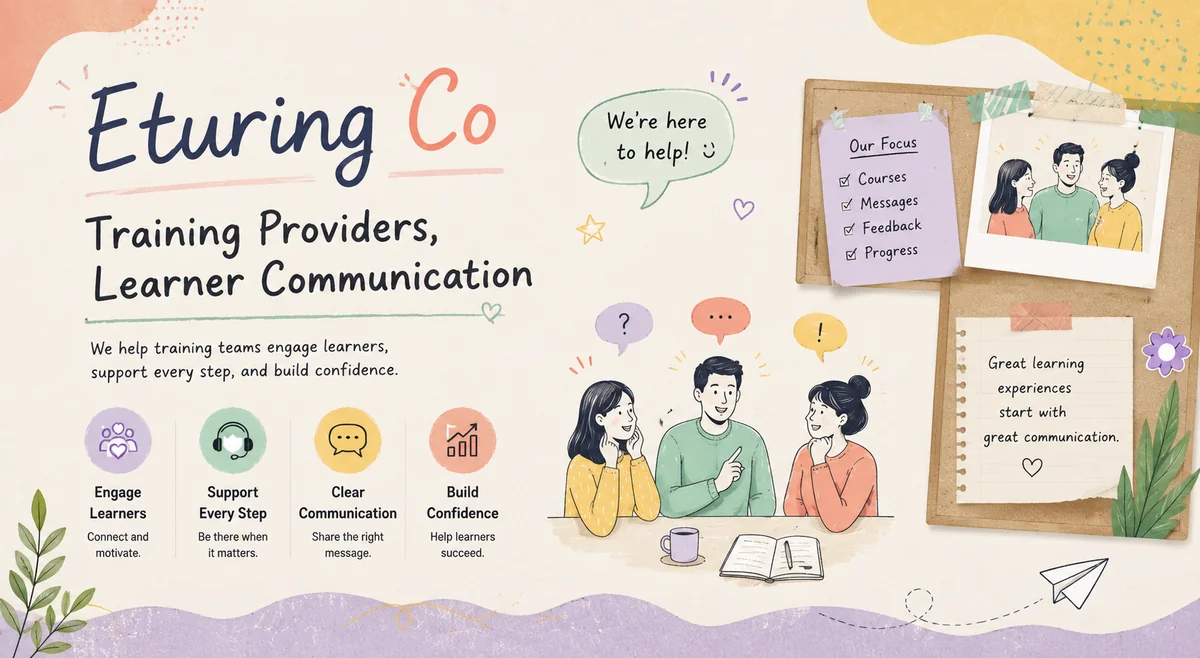
Boost Efficiency and Customer Satisfaction with a Learner Portal for Communications
For training providers, investing in a learner portal can have numerous benefits that enhance their services and improve customer satisfaction. By providing a central hub for learners to access course materials, track progress, and communicate with trainers, a well-designed portal can streamline the learning experience and increase overall efficiency. A learner portal offers training providers an opportunity to engage more effectively with their students, allowing them to monitor learner activity, provide support and feedback, and deliver bespoke services tailored to individual needs. This level of personalisation can lead to improved learner outcomes and increased customer loyalty. Furthermore, a learner portal can also facilitate the sharing of course materials, assessment results, and certification documentation, reducing administrative burdens and enabling training providers to focus on delivering high-quality instruction. By leveraging the benefits of
Benefits for Training Providers
Enhanced Course Enquiry Handling
The introduction of a learner portal can significantly enhance course enquiry handling for training providers, allowing them to streamline their communication processes and improve customer satisfaction. By providing learners with a dedicated online space to access course information, submit enquiries, and track progress, trainers can respond more efficiently to learner queries, reducing the likelihood of delays or misunderstandings. Additionally, a learner portal enables training providers to monitor enquiry volumes and adjust staffing accordingly, ensuring that no learner falls through the cracks. This not only improves the overall learning experience but also helps training providers to make informed decisions about resource allocation and course capacity. As a result, trainers can focus on delivering high-quality training experiences while maintaining a strong customer relationship.
Improved Learner Communication
A learner portal provides a central hub for improved learner communication, enabling training providers to keep learners informed and engaged throughout their learning journey. This can be achieved through regular updates on course materials, upcoming deadlines, and assessment schedules, all accessible via a single platform. By offering a self-service interface, learners can access information at their convenience, reducing the need for manual queries and freeing up staff time to focus on more complex issues. Additionally, learner portals often include forums or discussion boards where learners can share questions, concerns, and feedback with peers and tutors alike, promoting a sense of community and collaboration.
Streamlined Onboarding Process
- Implement a user-friendly login system to enable learners to access their personal learning records and course materials securely.
- Use a single platform to integrate all relevant learning resources, including video content, interactive modules and assessment tools.
- Provide learners with the ability to track their progress through personalised dashboards and detailed analytics reports.
- Allow training providers to set customisation options for learner profiles and notifications, tailoring the onboarding experience to their specific needs.
- Regularly review and update the learner portal to ensure it remains aligned with changing business requirements and learner needs.
Increased Accessibility and Flexibility
A local IT training provider, Computer Tech, noticed that many of its adult learners required flexible scheduling due to work commitments or caring responsibilities. To address this, they implemented a learner portal on their website, allowing learners to access course materials and submit assignments online at any time. This increased accessibility improved learner engagement and reduced the number of missed sessions by 30%. The training provider also reported a significant reduction in administrative tasks, as instructors no longer had to manually track learner progress or send out reminders. By providing a flexible learning environment, Computer Tech was able to attract more learners with diverse needs and increase their revenue.
Seamless Integration with Existing Systems
By integrating the learner portal with existing Learning Management Systems (LMS) and Customer Relationship Management (CRM) systems, educational institutions can create a unified learning environment that streamlines communication and enhances learner experience. This integration enables learners to access their course materials, submit assignments, and communicate with instructors and peers in one convenient platform. It also allows administrators to monitor learner progress, track engagement, and make data-driven decisions to improve teaching strategies. Furthermore, the integration can facilitate collaboration between departments, such as HR and IT, to provide a more comprehensive support system for learners.
Frequently Asked Questions
How does a learner portal improve customer service?
A learner portal improves customer service by providing learners with an easy-to-use interface to access course materials, track their progress, and communicate with training providers, thereby enhancing the overall learning experience.
What are the benefits of using a learning management system (LMS) for training providers?
Using a learning management system (LMS) for training providers benefits from improved data analysis and reporting capabilities, enabling them to track learner engagement, identify areas of improvement, and make informed decisions about course development and delivery.
Can a learner portal help with course enrolment and payment processing?
A learner portal can help with course enrolment and payment processing by providing a secure online platform for learners to manage their bookings, pay for courses, and access relevant information, reducing administrative burdens on training providers.